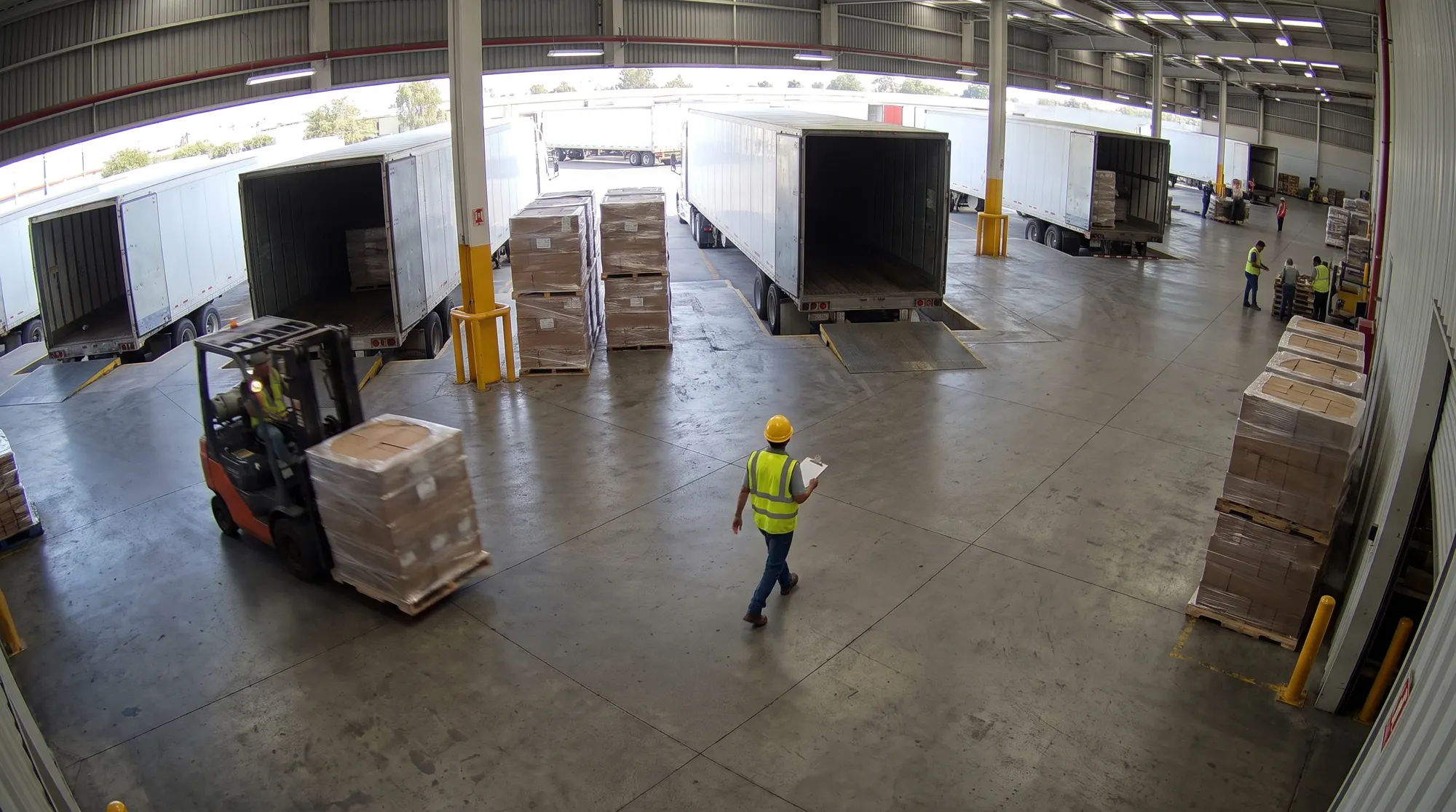
Nobody is watching your cameras. That is why you always find out late.
They record all day and only get opened once something has already gone wrong. This puts them to work sending alerts in the moment, with the piece of video that proves it, and without that video ever leaving your site.
Agents now operate in the physical world too.
In an office almost everything goes through a system. On the floor, on site and at the dock it doesn't: things happen, someone sees them, and they get forgotten. The camera is the only record that is already running full time, so that is where the agent comes in. What it sees stops being video and becomes a data point with a time and a place.
It reaches you while it happens.
It arrives over WhatsApp, to whoever needs to know. The video stays at your site: what travels is the alert, not your operation.
- 14:06It happens at the dock
- 14:06The alert goes out, with the clip
- 22:00Without this, you'd hear about it at the end of the shift. If someone mentions it.
 Dock 3, afternoon shift14:06
| What happened | Times | Where |
|---|---|---|
| Crossing in the pedestrian zone | 3 | Dock 3 |
| Dock stopped longer than usual | 2 | Dock 1 |
| Entry without protective gear | 1 | Yard |
By closing time, it is already added up.
What happened during the shift is counted, with where and how many times, and how many alerts were handled. Without anyone rebuilding it the next day.
You decide what to watch.
You write the rule the way you'd tell your shift lead. The agent keeps it on every camera.
- Nobody without a helmet in the pour zoneDetected 11:42 · alert sent to the site manager
- Tell me if a truck comes in after 6All clear
- Count how many are on the slabAll clear
Each rule lives on its camera. You turn them off whenever you want, without calling anyone.
Your cameras already see everything. Let's make them send alerts too, in the moment and to the right person.
Connect my cameras